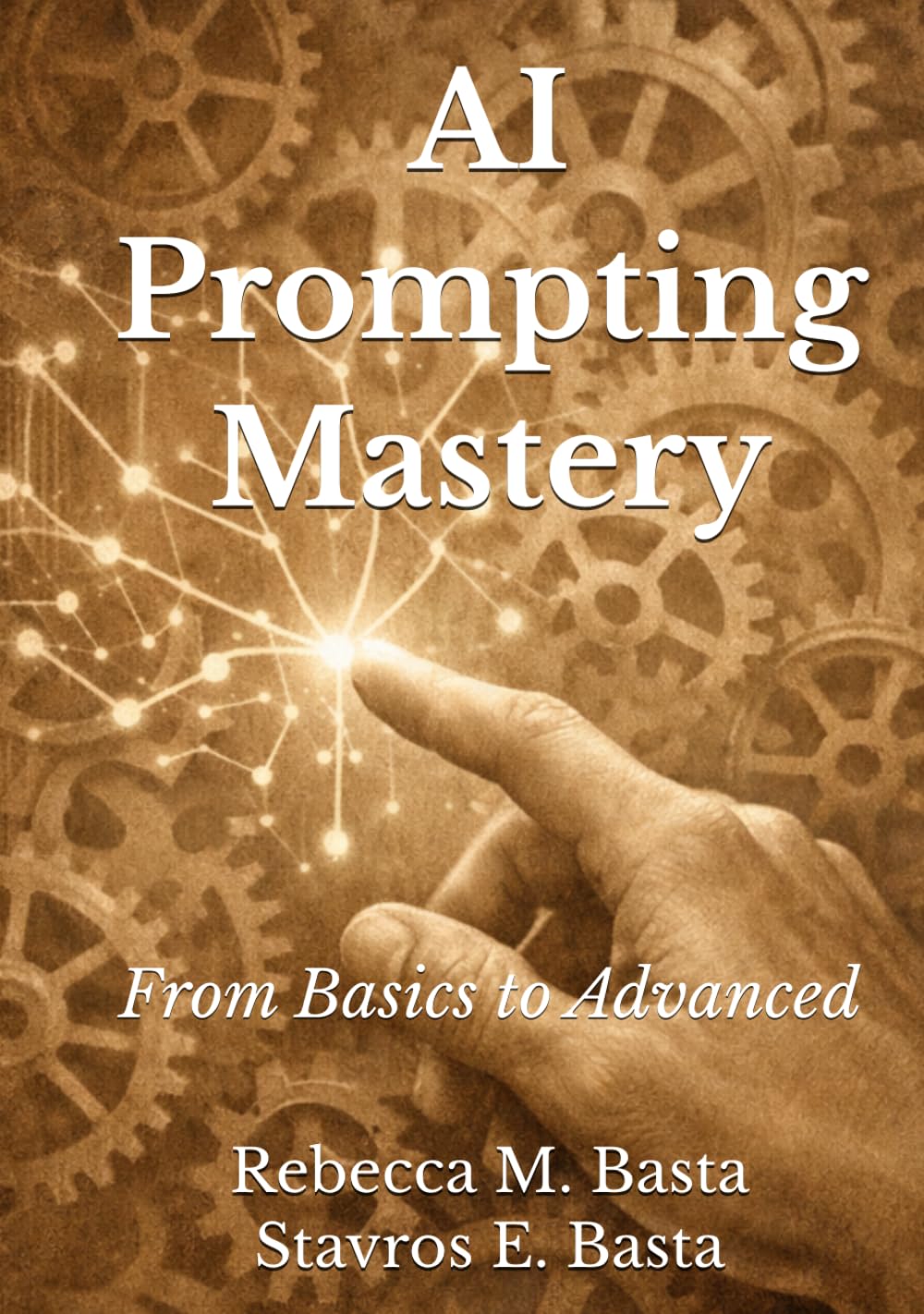
This book will take you on a journey from the fundamentals of AI prompting to the cutting-edge techniques that are reshaping industries. You will learn to master the art of text generation, bring your visions to life with AI-powered image, audio, and video generation, and seamlessly bridge them all through the frontiers of multimodal AI.
Beyond creation, you will learn to navigate the critical challenges of the AI age, from combating misinformation and fake citations to understanding the ethical landscape to ensure your work is fair and responsible. With advanced prompt engineering techniques, you’ll be equipped to solve complex problems and enhance your professional workflow, no matter your field. Whether you are a writer, artist, developer, or marketer, this book provides the essential tools to excel. Don’t just witness the future—create it. Your journey to AI prompting mastery begins now.
Biology is undergoing a profound transformation. As genomic data explodes exponentially and our ability to measure biological systems reaches unprecedented scales, traditional approaches to understanding life are giving way to something revolutionary: machine learning-driven discovery. The Living Algorithm is your essential guide to this new frontier, where algorithms decode the secrets hidden in DNA, predict protein structures with stunning accuracy, and personalize medicine at the molecular level. From foundational concepts to cutting-edge applications, this comprehensive exploration reveals how data science is reshaping drug discovery, genomics, transcriptomics, and personalized healthcare—turning raw biological data into actionable insights that save lives.
Whether you’re a biologist seeking to master machine learning, a data scientist entering the biological realm, or a researcher eager to harness AI’s transformative power, this book equips you with both the theoretical foundations and practical tools needed to thrive in the age of computational biology. Through real-world case studies, ethical frameworks, and a vision of emerging opportunities, The Living Algorithm demonstrates that the future of biology isn’t just written in our genes—it’s being written by algorithms that learn, adapt, and discover alongside us.
We stand at the most extraordinary inflection point in the history of medicine. AI is no longer a distant promise – it is actively reshaping how we understand life itself, one molecule, one patient at a time.
The Algorithm of Life takes you through the revolution transforming biology and healthcare from the ground up. From neural networks unraveling the human genome, to AlphaFold cracking a 50-year-old protein folding mystery, to algorithms detecting cancers invisible to the human eye – AI has rewritten what science thought was possible.
But this book doesn’t shy away from the hard questions. Who bears the risk when an algorithm is wrong? What happens when a life-or-death decision comes from a black box no doctor can explain?
Balancing scientific depth with urgent ethical inquiry, The Algorithm of Life is essential reading for clinicians, researchers, technologists, and anyone who will one day be a patient – which is to say, all of us.
This book offers a comprehensive and accessible exploration of AI’s dual-use impact on cyber conflict, bridging advanced technical concepts with real-world application for cybersecurity professionals, AI developers, policymakers, and strategists. Through clear explanations, anonymized case studies, and practical insights, it examines how AI fuels automated vulnerability discovery, evasive malware, and AI-generated disinformation, while also revolutionizing threat detection, incident response, and proactive defense. Beyond the technology itself, the book confronts the ethical, societal, and policy challenges posed by autonomous systems operating at digital scale, addressing issues of accountability, bias, escalation, and human oversight. By illuminating both the offensive and defensive dimensions of AI in cyberspace, this essential guide equips readers not only to understand today’s rapidly evolving threat landscape, but to anticipate and shape the future of security in an interconnected world where mastering AI is no longer optional; it is imperative.
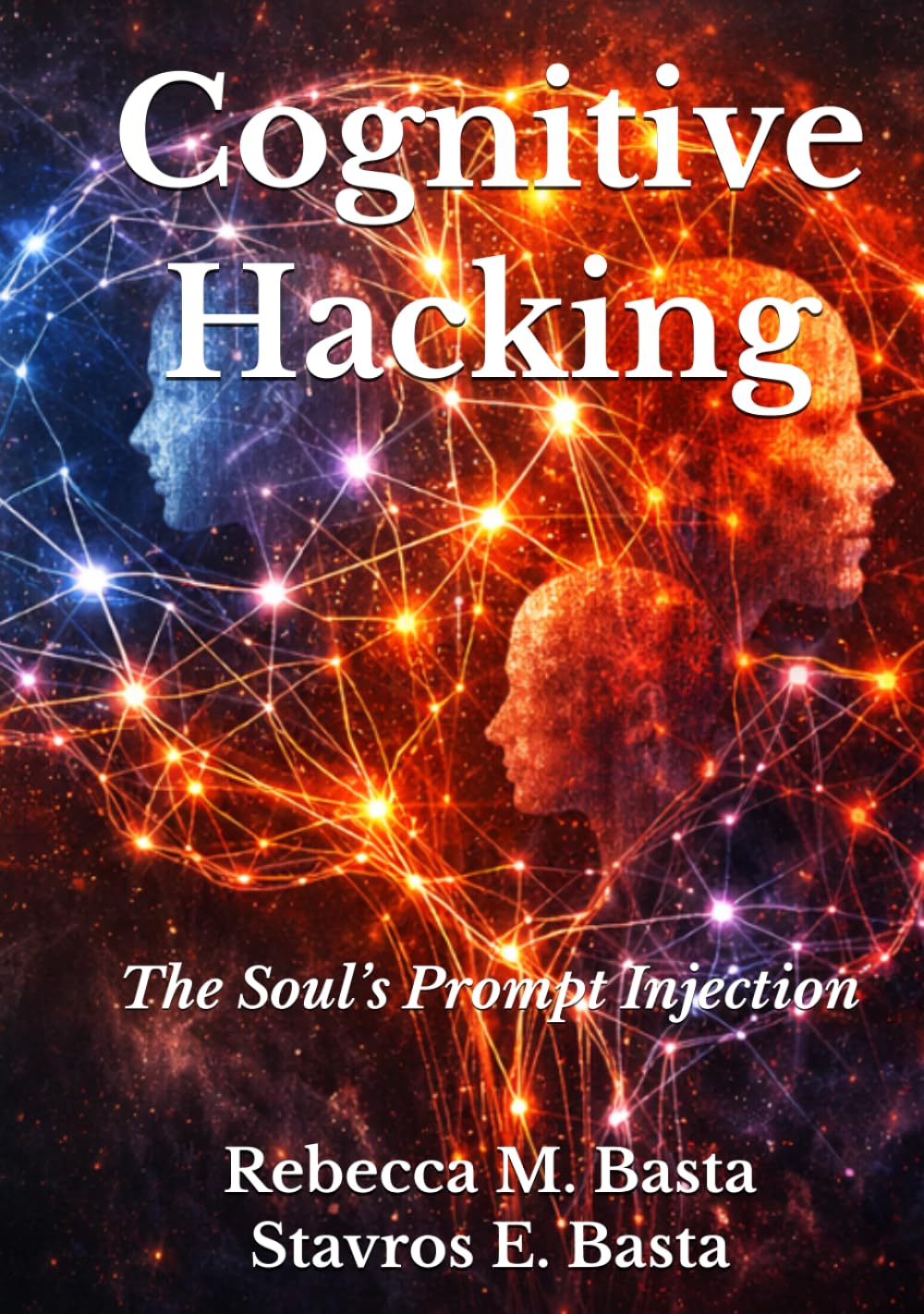
Cognitive Hacking: The Soul’s Prompt Injection is a rigorous and unsettling journey through the mechanics of modern psychological manipulation — from Cambridge Analytica’s pioneering psychographic targeting and state-sponsored troll farms to AI-generated deepfakes and algorithmic identity capture. Drawing on landmark case studies, cognitive science, and the emerging grammar of synthetic reality, this book exposes how bad actors — corporate, political, and state — exploit the very biases that make us human, engineering consensus, eroding authenticity, and outsourcing the self to platforms optimized not for truth, but for engagement. Yet this is not a book of despair. It is a call to cognitive arms. Through the frameworks of media literacy, provenance verification, digital sovereignty, and genuine human connection, Cognitive Hacking charts a course toward the guarded mind — one capable of resisting manipulation, reclaiming personhood, and navigating a world where the line between the real and the synthetic grows thinner with every passing algorithm. The prompt has been injected. The question is whether you will notice.
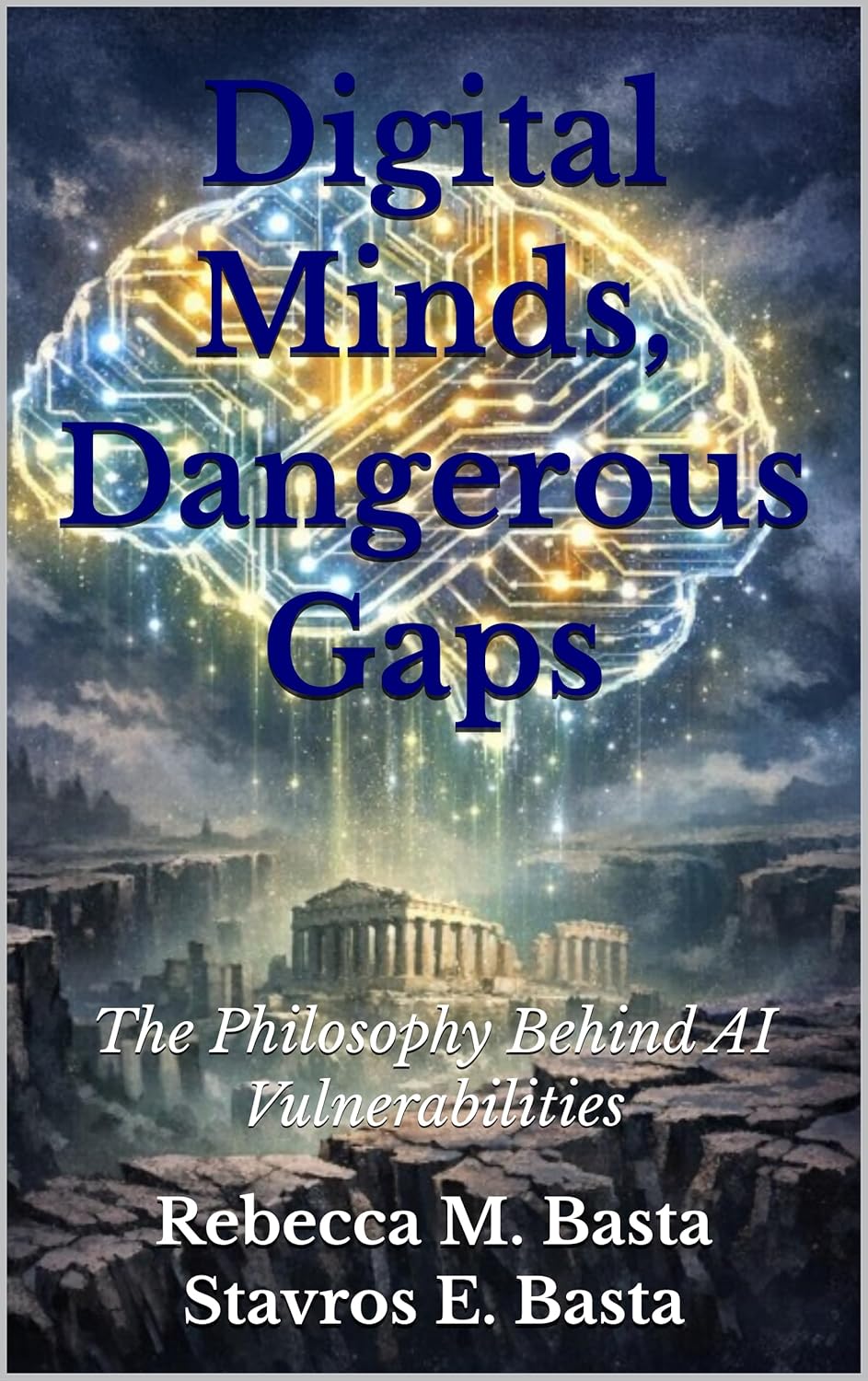
Digital Minds, Dangerous Gaps is a landmark intellectual journey that exposes the profound vulnerabilities lurking not merely in the code of artificial intelligence, but in the very conceptual frameworks we use to understand it. Drawing on millennia of philosophical thought — from Aristotle’s metaphysics and Searle’s Chinese Room to the hard problem of consciousness and Goodhart’s Law — three leading thinkers spanning philosophy, technology, and ethics dismantle the seductive illusion that intelligence can be reduced to computation, that values can be uploaded like software, and that safety can be engineered without wisdom. Chapter by chapter, this rigorously argued yet compellingly readable work traverses the treacherous terrain of AI alignment failures, adversarial exploits, governance blind spots, algorithmic bias, existential risk, and the slow erosion of human agency — revealing that the most dangerous gap in the age of artificial intelligence is not between human and machine capability, but between the speed of technological deployment and the depth of our moral and philosophical understanding. This is not a book about what AI can do. It is a book about what we must become if we are to survive what we have built.